In this article Start with a narrow palette 2 min read
Trends come and go quickly in interior design. A warm neutral palette is one of the few approaches that stays beautiful for years, and it makes a busy family home feel restful.
Start with a narrow palette
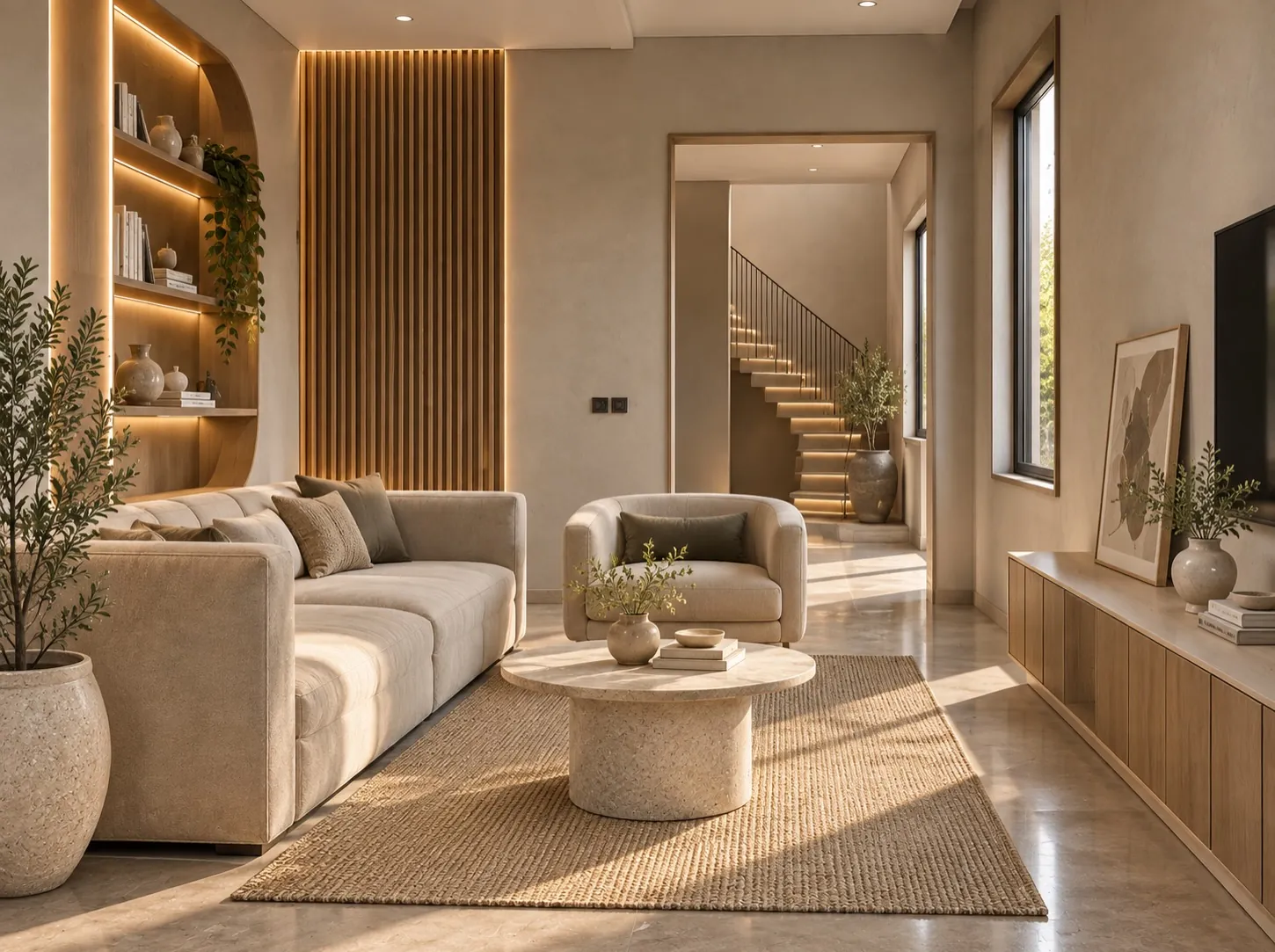
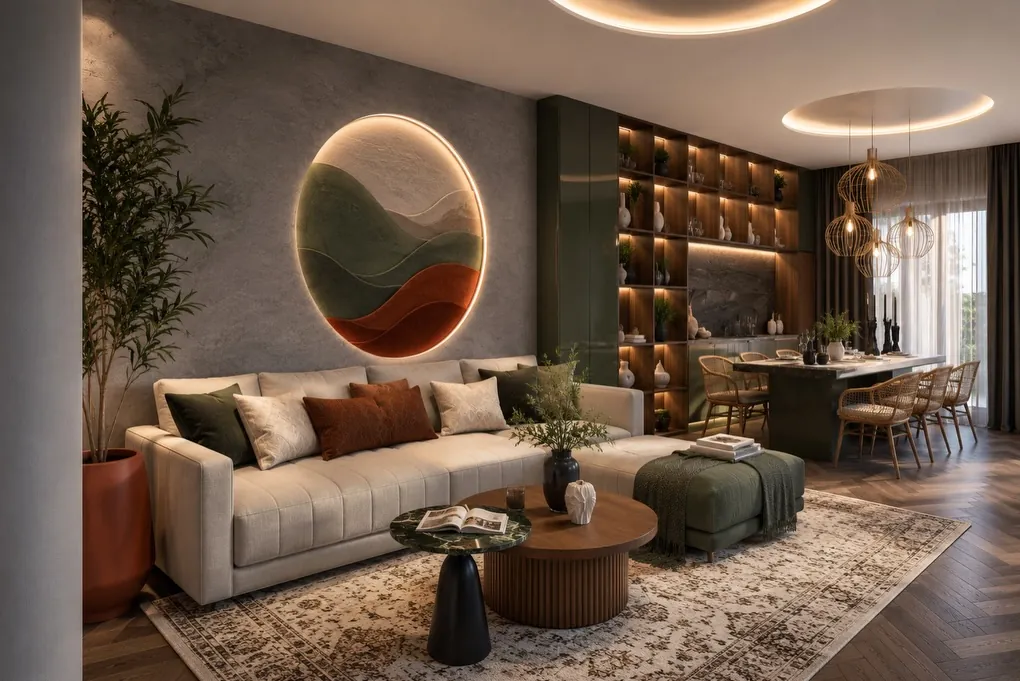
Choose three or four related tones: a soft off-white for walls, a warm beige or greige for large surfaces, and one deeper shade such as walnut or clay for contrast. Keeping the palette narrow is what makes a room feel calm.
Add texture instead of colour
A neutral room can feel flat if every surface is smooth. Bring in texture to keep it interesting:
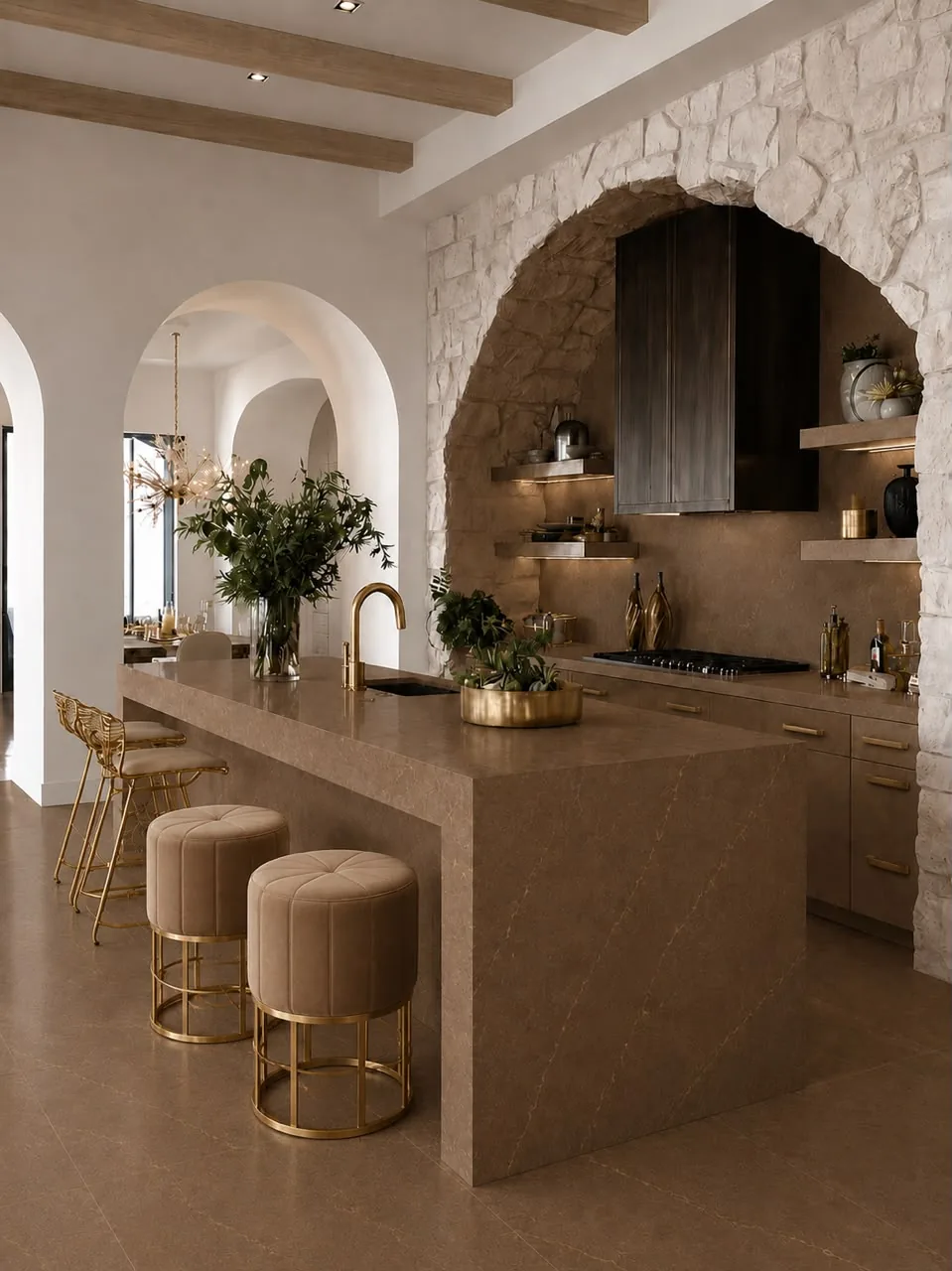
- Natural stone or textured plaster on a feature wall
- Wood with a visible grain on shelves, doors or a TV wall
- Linen, boucle or jute for sofas, curtains and rugs
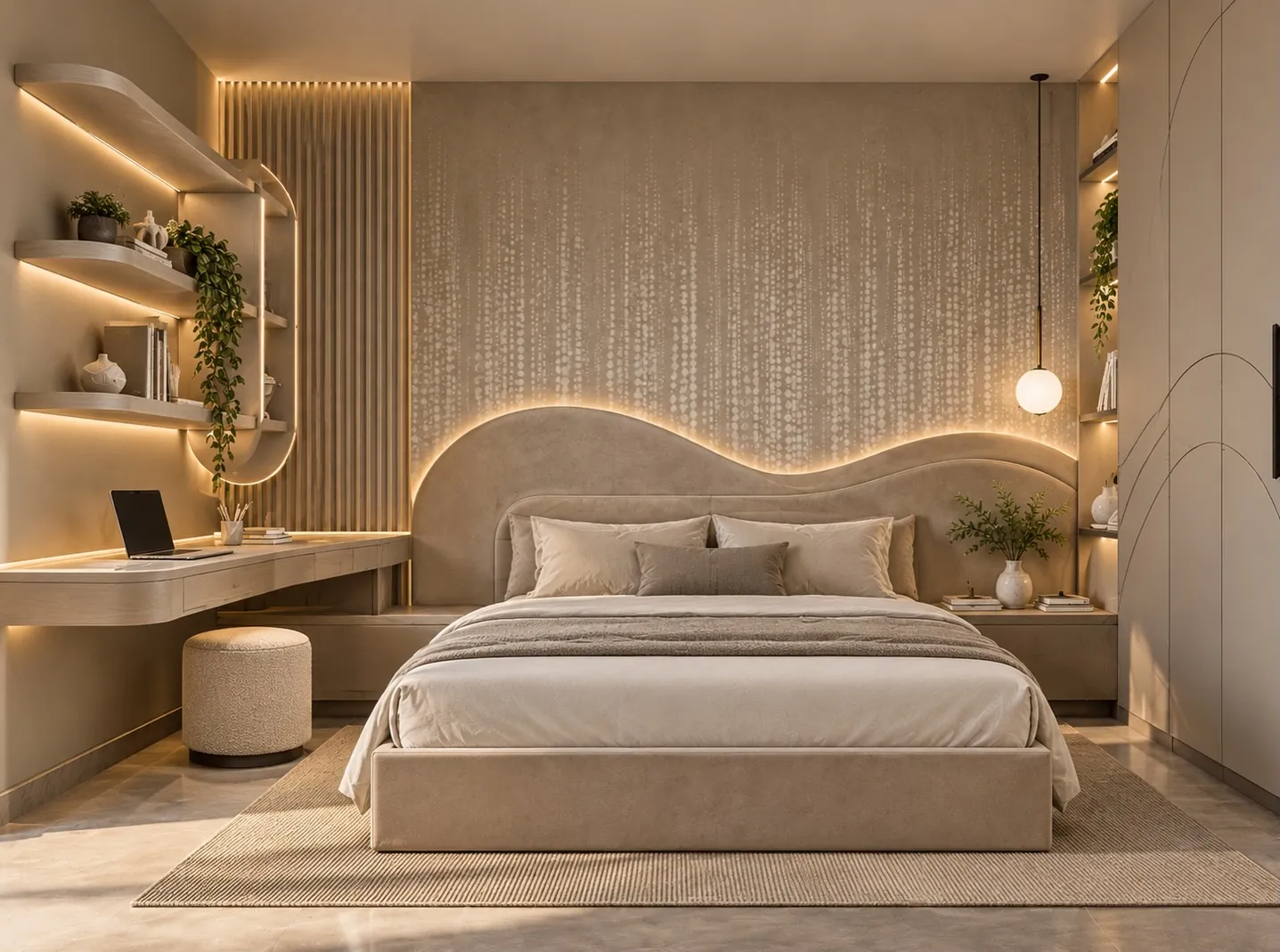
- Fluted panels or rounded edges for softness
Layer the lighting
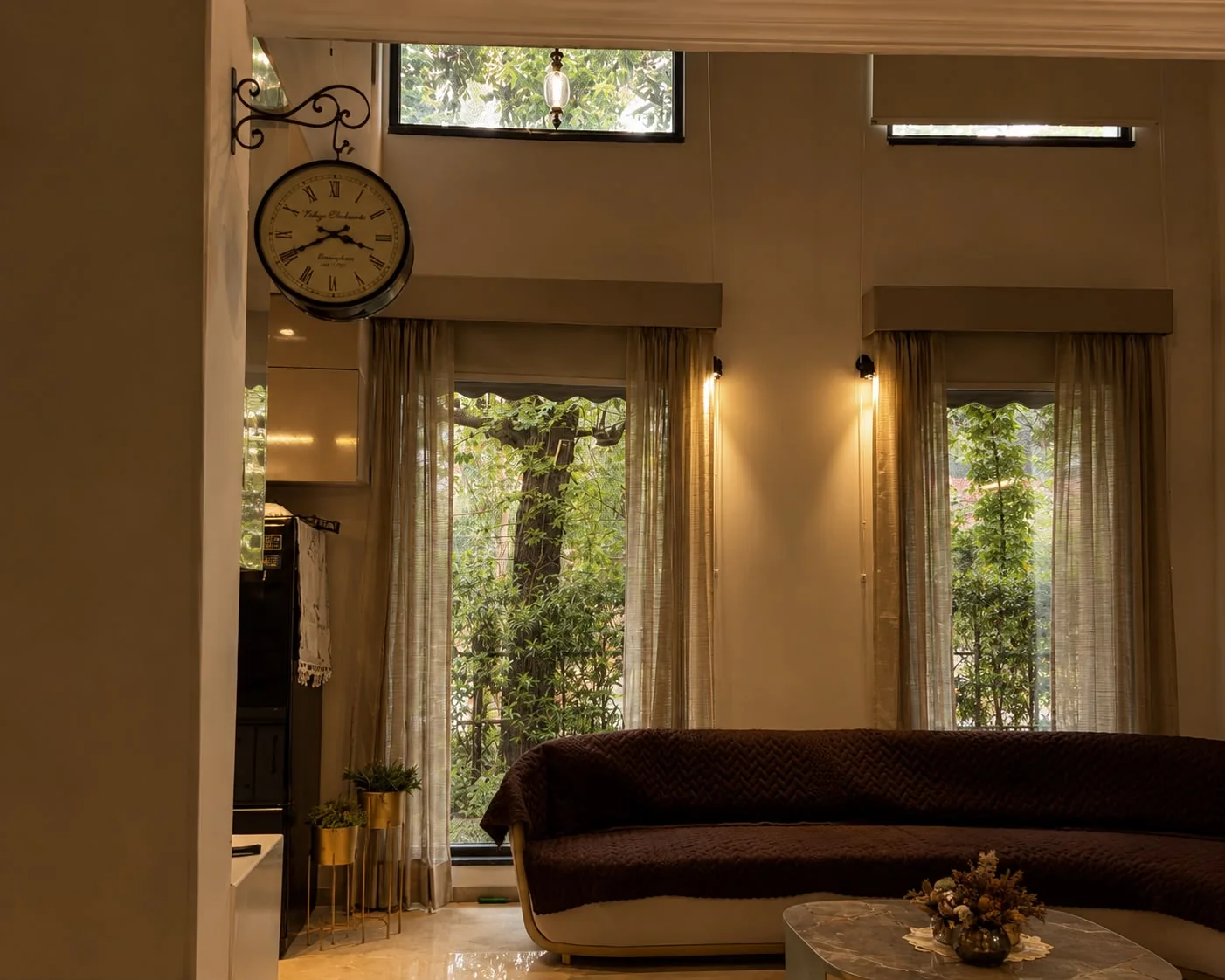
Lighting changes neutral colours more than anything else. Plan three layers: soft general light from the ceiling, hidden strip lights in shelves, coves and under steps, and a few warm lamps at eye level. Warm white bulbs keep beige and wood tones cosy rather than grey.
In a neutral room, light does the work that colour usually does.
Keep it practical
Neutral does not have to mean fragile. Choose washable paints, stain-resistant fabrics and darker tones on floors and lower surfaces that see the most use. Built-in storage keeps clutter out of sight, which matters more in a calm room than in a colourful one.
Bring it to life
Finish with plants, books and a few personal pieces. They add warmth and make the space feel like yours rather than a showroom.
Planning your interiors? See our interior design service or look inside a calm, neutral home we designed.